
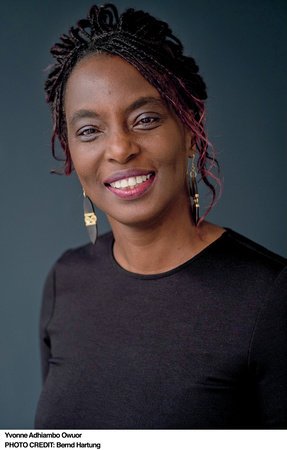
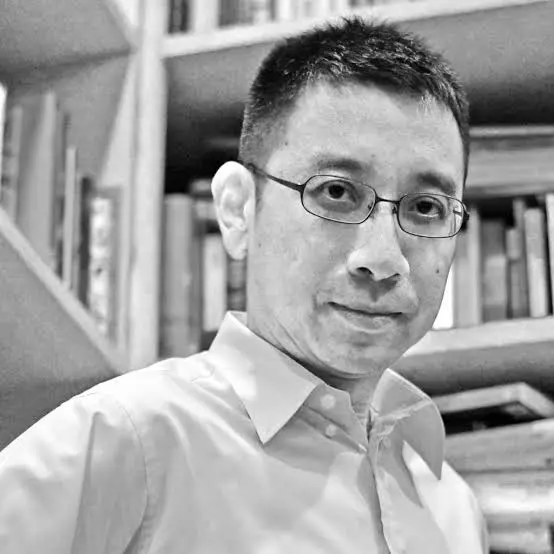
Alvin Pang and Yvonne Adhiambo Owuor in a dialogue with Professor Nishat Zaidi and Professor Dilip Menon on archipelagic identities, multilingual belonging and the possibilities of rethinking human connections beyond colonial and national boundaries.
https://www.youtube.com/live/FbHKNvqYPnE
Introduction
Alvin Pang is a Singaporean poet, editor and literary figure known for bringing Singaporean writing to an international audience. He received the prestigious Young Artist Award (Literature) from the National Arts Council Singapore in 2005, followed by the Singapore Youth Award (Arts and Culture) in 2007 for his contributions to literature and culture. His major poetry collections include Testing the Silence (1997), which was shortlisted for the National Book Development Council of Singapore Award, City of Rain (2003), acclaimed for its exploration of urban Singapore, and When the Barbarians Arrive (2012). As an editor, he co-edited anthologies such as No Other City: The Ethos Anthology of Urban Poetry (2000), Love Gathers All: The Philippines-Singapore Anthology of Love Poetry (2002), Double Skin, Tumasik: Contemporary Writing from Singapore (2009), contributing to transnational poetry. His latest works include Uninterrupted time (2019), Diaphanous (2023), in collaboration with George Szirtes, What Gives Us Our Names: Rosetta Edition (2024) and All That Is Left of the Sea (2025).
Yvonne Adhiambo Owuor is a Kenyan novelist and short story writer known for her lyrical prose that explores memory, history, displacement and transoceanic identities. Owuor gained international recognition after winning the prestigious Caine Prize for African Writing in 2003 for her short story The Weight of Whispers. She also received an Iowa Writers’ Fellowship and, in 2016, was awarded the Kenya Head of State Commendation for her artistic and cultural contributions. Her debut novel Dust (2014), which examines Kenya’s hidden political and familial histories, was shortlisted for the Folio Prize in 2015 and has been widely translated. Her second novel, The Dragonfly Sea (2019), is a coming-of-age narrative that explores East African maritime imagination. Owuor’s essays and stories have appeared in publications such as McSweeney’s and Daughters of Africa, while her story The Knife Grinder’s Tale was adapted into a short film. Beyond literature, she has also served as the Executive Director of the Zanzibar International Film Festival from 2003 to 2005.
Interview
Dr. Alvin Pang commences the conversation by mentioning the first time he was introduced to Yvonne Adhiambo Owuor. They first met at a literary festival in Thiruvananthapuram, India. They were both placed on the same panel randomly. Yvonne went up and started reading from the novel The Dragonfly Sea, and the first thing she mentioned was that it was based on the story of the Chinese admirals and their travels following the traditional oceanic trade routes, which, of course, travelled all the way to places such as the eastern shore of the African continent and brought the giraffe back. Dr. Pang restlessly waited for her to return to her seat, and the first thing he said was, “That is my relative.” The conversation series started with this anecdote from their first meeting.
Alvin Pang: I am not descended from him (the Chinese traveller) by any means, but we share common ancestry. On my mother’s side, they keep all sorts of records, and my grandfather once brought my mother back to our ancestral village and ancestral home in China. Later on, through documentaries and research, I found out that surname; that is my mother’s clan. In fact, that lineage goes all the way back to the Yuan dynasty and the Turkic general who had come over to govern the Yuan. So, it is apparently a known thing, and I look obviously ethnically Chinese in Singapore. We tend to put communities into these buckets, very crude buckets, and of course it is a legacy of colonialism to put these very complex, nuanced regional identities, cultures, traditions, and languages into buckets. So, in Singapore, the buckets are fourfold: Chinese, Indian, Malay, and Others, literally Others with a capital O; it is hilarious. These very crude buckets elide and cover up all kinds of complex and interesting histories. I was fortunate enough to have heard this story about an illustrious ancestor. I think the more interesting point is not just that Sun was a distant great-great-great grand-uncle, but that this therefore implies my ancestors were Muslim and I am technically a descendant of the Prophet Muhammad.
Yvonne Adhiambo Owuor: In response to that, writing in the ocean, I think Alvin and Dilip also alluded to the categorization, the typologies, the confinement of the human being. As an artist, I have never found a box I did not want to get out of. I think the constraints of the imagination of the world, and the projection of that small imagination upon our lives, the lives of the imagined peripheries such as ours, mean that, as I said as I walked into the world, both as a human being and as a witness to the world, I was both irritated and surprised by how small the world was compared to what the world is. In my own country, there is a contradiction as well as a conflict in the imagined self in Kenya. I used to say that lightly, but I did not really realize how important that was. Within a radius of one kilometre, you are likely to encounter at least five different languages and cultures. I can stop in one of the streets of my own city, and this is part of my growing up, and I thought the world was like that. I could walk from a temple to a mosque, to a Catholic church, a Presbyterian church, to the Freemasons; literally, I could skip from door to door, again, innovation within a crossroads, and there was an ease in wearing worlds. I could mourn the death of my Muslim friend’s mother and go and weep with her. It was this kind of ease that, upon stepping out into the so-called big world, I found all of these things became contested spaces and contested sites. So, as part of my own writing, not necessarily as therapy but as a form of meaning-making, I tried to reconcile that, or come to terms with that, or come to peace with the paradoxes of encountering a world that was supposedly bigger and superior, only to find that it was actually much smaller than what I knew. Yet that same world looks upon my own world, from which I have come, and regards it as small, undeveloped, and unsophisticated. There was that aspect as a motivator, along with curiosity about human beings and my own passionate and unrequited love for the seas, particularly the seas others call the Indian Ocean. I insist on calling them the Swahili seas, but I find that they have many names and many faces. That was influenced by my own time at the Zanzibar Film Festival. Zanzibar is an island; it is a microcosm of the entire world. To encounter that space did quite a mind job on me. It expanded my idea of where Africa begins and ends beyond the terrestrial, finding that so much of Africa lies hidden in the seas and that the narrative of that has also been lost, or seems to have been lost, in our post-independence, postcolonial imagination. I was working in Zanzibar during the film festival, discovering and creating a kind of imagined geography linked to the seas that bind us and therefore showing works. I remember opening one of our film sessions with a MacBook, and it was amazing to see how, when people came from the seas, from wherever in the world they came from, frankly, it created an incredible fluidity of identities. When the sea is involved, nationalities fall apart and other contestations emerge in a light-hearted way. We talked about a maritime imagination. I think part of my own realization of identity is understanding that this is intrinsic, that it is part of my own belonging. My role then is to figure out the extent, depth, and scope of that.
Dilip Menon: Thank you. I mean, it is actually about writing the world as it is before your eyes, as you have experienced it, and writing it against the world as it has become, so to speak.
Yvonne Adhiambo Owuor: Beautifully, yes!
Alvin Pang: I am going to talk about this in three aspects which resonate with what Yvonne has said. So, the first aspect is positionality, in the sense that my writing life is intrinsically tied up with being Singaporean and being Southeast Asian in general. You are talking about a part of the world that has always been at the confluence, as it were, at the crossroads of trade routes, cultures, and traditions since time immemorial, right? We were always part of that connection, economic and intellectual, going back centuries, if not millennia. So, I think it is not really surprising, in that sense, for someone coming from Singapore, being an island, being steeped in trade and global economic flows, to speak to and relate to that sense of being in the middle of things, in the marketplace of the world, and being comfortable with that sort of imagination. I think some have called it a thalassocratic sense of imagination, in that it is about trade routes and networks rather than about holding territory. I think the civilizations of Southeast Asia have always had that sort of perspective. It is, if one says, very different from the world we were educated into believing was the norm, the ideal to aspire to, which is the very British middle-class idea. When I was growing up, there was no sense of Singaporeans being cultural producers. We were brought up to be consumers and clerks; this goes back to colonial times. We were brought up to be good administrators of the British systems of law, government, education, and so on. There was no sense that we were also meant to tell our own stories. Art came from France, religion came from China, India, and the Middle East, and so forth; sex came from the US, etc. There was no sense that we could have our own thing. This was completely at odds with what we saw as a ferment, a sort of bubbling forth of all kinds of, frankly, much more exciting things. Take food, for example. Singapore is a crucible for cuisine that has taken from all the different great traditions in the world. Recently, we won World Heritage status for hawker food, and it is ground-level food. This is not Michelin dining; this is not the food of kings. This is ordinary street fare that draws from all these streams to which we have been exposed. The language, of course, you talk about Singlish, and so on and so forth. There is just so much more to us than the world allows, recognizes, or celebrates. That is one. Second, I think the second aspect has to do with the kind of work I do. I am a poet, and I think I was drawn to that because of the musicality and the imaginative possibilities of poetry in a society where our founding Prime Minister, the late Mr. Lee Kuan Yew, famously said that poetry is a luxury we cannot afford. We have been set socially on a decidedly prosaic, material, technical sort of path: pragmatism, economic growth, etc. Like Yvonne, I think the temptation to push back against that, to celebrate the music and song in language and ideas that I saw all around me, was a natural resonance. Later on, as a translator and anthologist, this instinct to always bring together what has been set apart has characterized much of my work. We want to gather the waters, as it were, to pour different streams together rather than police the boundaries. I think the third aspect, which only came later, is the more scholarly and academic one. The more I got into the research side of things, I am also editor-in-chief of a public policy journal, so my work starts to draw in that prosaic side of life, I began to realize that these were questions, as you would no doubt know, that are becoming more and more resonant and relevant in the twenty-first century in an increasingly globalized world. The metaphors Yvonne and I have been reaching for, the methods, the rebellions, the mischief we have been up to, turn out, like in the tech world, to be exactly what the human species as a whole might need and look toward. Right time, right place, I suppose.
Nishat Zaidi: As you pointed out, Yvonne, the place that you come from was very cosmopolitan, and it is only when you went out to face the larger world that you realized the larger world was actually very narrow. So, that takes us to the next theme. Is there a distinct politics in your aesthetic engagement? Do you consciously write about your position and the location that you come from? Because, as you know, in The Dragonfly Sea there is a point at which the character Ayana thinks that the word Africa triggered some stupidity hormone. Do you have a consciousness of location at the back of your mind while writing? This question is for both of you because, Dr. Pang, you also write with the consciousness of your location. Do you see yourself as a writer who engages with the current paradigms of decolonizing the imagination? Are you conscious of these theoretical positions while writing?
Yvonne Adhiambo Owuor: Thank you for that question. I approach the writing space, I call it sometimes the dojo, with a kind of imagined openness to what emerges. I adore story and its rules and implications. So, the notion of story truthfulness and character truthfulness is important to me. My late friend Pinyabangwa was the first person to tell me, “Yvonne, get the hell out of the story.” If it happens that the characters adopt aspects of my own political irritations, and those seep into the lives of the characters, it does so purely in error. But yes, I guess, as much as one inhabits story, even if one attempts to absent oneself from it, passing through the story itself must be influenced by the things that I see in the world. The questions I have in the world are situated sometimes in Nairobi, sometimes in the ocean of East Africa, in Kenya and Africa looking at the world, and sometimes in Europe, India, or other places looking at Kenya. Aspects of this will leach through whatever one wants or not as part of the identity within the story. In terms of the notion of the global decolonization movement, I suspect, because we have had this conversation a little with Alvin that my own quest is to wonder whether we have another grammar for what needs to be done. I am no longer interested in centralizing the Occidental experience and its impacts on our lives to preoccupy my next century of existence, my next half-century of existence, through endlessly mulling over what the West has done. I am interested in the interstices of possibilities, what the future might hold, what a grammar of the future might represent, especially as we see, certainly in the zeitgeist of the time, the movement of the world, the shift of the world toward our seas, toward what is called the East, but it is not necessarily just the East. There is a shift happening in the world, and I am mostly interested in what the grammar and language of us might be within the imagination of the new world that is coming, or perhaps is already here. I feel the greatest urgency, both as an artist and as a human being, in asking what my role as an artist is within that space. It is a liminal space for the time being. What does it mean? What is its language? What does it mean for my relationships with you? How then do we speak of us in a way that we have not spoken about ourselves for a long time?
Alvin Pang: So many ways of looking at this resonate with what Yvonne has said. I do a lot of analytical work looking at world affairs and things like that in my editorial work in public policy, which is why, when it comes to my creative writing, poetry and fiction, I think the impulse is primarily not politics but play. One of the things I learned over the years is precisely the fact that it is not ideological, that it is not founded on these sorts of markers and indicators that makes writing most subversive. I found that it was subversive not particularly to care, as a writer, about the readership markets in London and New York, and instead to be more interested in what you think, Nishat, and what you think, Dilip, and to have conversations with Yvonne and the readers we have encountered over the years. These communities of practice, readership, and connection matter more to me than the traditional structures of intellectual and literary power that we have been told to look toward. Of course, I speak from privilege. My particular circumstances in Singapore, which is a relatively affluent country, allow me not to need to make a living from writing. I think that has been quite liberating. The fact that we have our own literary mechanisms in Singapore has, out of necessity, freed us from the dependence that still catches many people in this kind of loop. I think it is very important that we start thinking of that grammar we have been talking about, the language of confluence. Yvonne and I have been having conversations about that, and it might come up as a metaphor for thinking differently about oceanic connections. But I also think it is important to talk materially about relations. Are we reading each other’s books? Why is it that bookstores stock books from London and New York rather than each other’s books? Why do we not have these exchanges? In fact, I think Covid has been brilliant for this because it has, out of necessity, broken down some of these assumptions. Zoom means anybody can connect from anywhere. We can have this conversation now. Before Covid, we might have had to meet Yvonne perhaps in Paris, London, or Berlin rather than here, as it were. Why do we not build on that? Why do we not have our own relations, sidestepping the middleman, in a sense? Ironically, if you know your histories, it looks like a return to the state of the world, to a state of oceanic connections that existed before the sixteenth century and the European incursion into our spaces. I am not necessarily looking for a return. I think the fact of that history tells us it was possible and may be possible again. It is not unviable, and we do not actually need that intervention. But, like Yvonne, I look to the future, knowing that this was possible, knowing that it is desirable. Now what, then, can we build together looking forward? A lot of my work recently, including my fiction, has been speculative, looking forward a hundred years and imagining different sorts of world orders, not all good, but different from what has come before. I feel passionately about this. One thing to note is that when we use the ocean as method, it is worth remembering that we are not just talking about the literal ocean. The water is important; the seas regulate climate, as we know. But I think the bigger point here is to remember, or perhaps remind ourselves, that the ocean tells us and reminds us that we are islands, but the sea is whole. The ocean reminds us that many of the issues we face are interconnected, that the boundaries we have set up between professions, between roles, between academics and creatives, and to some degree between nations and borders, are not necessarily arbitrary, but they are fluid. Look again at Covid. A profound lack of understanding about that fluidity allowed this pandemic to spread. Certain parts of the world believed they were immune from the “China virus” or the “Asian virus,” at the same time as they were perfectly happy to profit from the labour of Chinese people and markets. So, I guess it is not about blame anymore. It is about us as a species realizing that we depend on each other, and we always have. We trade, we love, we buy, we sell, we make war, and we connect. To think oceanically, I think, is to remember that those fluid relations, not the boundaries we draw around them, are what actually move the world, where our energies come from. Knowing that means tracing where they are going, who controls the floodgates, who is damming them, who is channelling them, and whether they can be reconfigured in a way that is more beneficial to the human species as a whole. I think that requires us to think beyond our silos, beyond our comfortable boundaries of what we are supposed to do or not do. In that sense, not only can academics and writers play a part, but everyone has a part to play. We cannot afford not to contribute wherever we can and find a way together to move forward, or die. There is always that alternative. There is no guarantee that we will survive, is there?
Yvonne Adhiambo Owuor: I love what you have said, Alvin, and I return to that word you keep using often, and I hope you can talk about it a little later: the idea of confluence. When I was doing research around The Dragonfly Sea, and for the first time speaking to those who actually look at the world as if they were in the middle of the ocean, a couple of things struck me. It goes back to that call for another grammar of us, another grammar in which the histories and the ways in which the ocean has storied itself in the lives of the many who have, for whatever reason, entered into silences, can speak to us regarding this present time. This is not the first time the oceans or nature have raged against humanity, and there is so much knowledge and memory of responsiveness embedded within cultures that have either been written out or disappeared. I am not blaming anybody because, as a privileged postcolonial subject, one has also played a role in being blind and deaf to what actually exists as a template for us. I remember that at the time of the tsunami, the casualties along our part of the world were extremely limited. When I was speaking to some of the fishermen and boatmen, they told me they had read the seas the previous night before the tsunami came. They had read the seas and watched the behaviour of the ants, the movement of the birds, and the direction of the fish. So, many of them had beached their boats before the ocean hit, before the ocean surged. I think the story is repeated in several parts of the world where the fluidity Alvin refers to, between selves, between worlds, and when I say “world,” I mean our world and the ocean world, makes the lines very thin. When I speak of that language, that grammar, it becomes part of my own quest in rediscovering or reactivating what lies there that can speak to this particular present moment. The second thing I learned from my Greek teachers, the fishermen and boatmen, was that the human panic about our transience, the fact that we will die, is not such a big deal for worlds in which everyday existence is an encounter, a gift of presence, of taking the day as a gift and being grateful that you return. On Pate Island, where this story is set, one of the most beautiful things I have ever experienced was the return of the fishermen. Every single day there is a new song of gratitude for the return. I do not know about different cultures, but I have become suddenly more aware of our terrible relationship with transience, with death, and I wonder what other vocabulary might exist beyond that which we have adopted and made part of our lives. What allows death to become part of our own narrative of being in an easier and simpler way, allowing us to gaze more kindly at the world even in its brokenness?
Alvin Pang: Yvonne, what you just said reminded me of that speaker and her book that we both encountered together in Bremen, ironically: Karen Ingersoll, who wrote a book called The Seascape Epistemology. She investigates and examines what her Hawaiian Indigenous heritage can tell her about exactly these issues. From that, she speaks to her version of an oceanic method that has to do with a very different relationship to land, culture, history, death, and life. One point that struck in my head, for example, is that they do not regard the sea and the land as separate entities; they are continuations of each other. In a profound way, with tides and ecosystems, they really are connected. What you do on land affects the sea and vice versa. That is built into their particular epistemology. She tries in her book to draw that out in a way that is resonant and applicable to some of the questions of our time. One of the things she notes is something we have also noted: we have moved away from that. We have lost, erased, or cut ourselves off from those particular forms of thinking that used to sustain us.
Yvonne Adhiambo Owuor: Thank you for those insightful questions. Now, writing from the ocean as opposed to writing from the land does make a difference, absolutely, certainly for me. One writes from what one loves in many ways, and I also write from what I do not know. I do not know the ocean, but I do know that I love the ocean, and it is not a quantifiable or logical love. I know I am a better human being when I am close to the ocean. It also means that, as someone completely influenced by the landscape in which I find myself, what I write close to bodies of water and close to the sea is completely different from what I write in an urban space. What I write in Nairobi is not the same thing. The feeling, the emotion, all the things that come together within and then manifest as words on a page, it is almost as if there are two different beings working on one particular story. I can say, as an artist in practice, that what I write by the sea is very different from what I write when I am in the hinterland. My writing in the hinterland, in urban spaces, whether it is Berlin, the mountains of Switzerland, Swaziland, or even Nairobi, is always changed by my longing for the sea. There is not a day when I am in the city, far from the sea, that I am not longing for it. That probably conveys itself in a kind of yearning and longing in the text as well. I keep thinking that to be Kenyan is to be archipelagic, to embody the idea of a people who are mostly migrants, who have come from somewhere else and yet have found a place of belonging in this fluid space. The country itself is a very fluid space. You will come to Nairobi and be mildly scandalized when you hear Nairobi people claiming samosas and chapatis as their own. We will fight; we will raise our flag in the statement that our chapatis, samosas, biryani, and pulao are Kenyan.
Yvonne Adhiambo Owuor: So, there is a way in which the people of the archipelagos, wherever they are from, converge in different spaces and find their belonging. I went to Kerala and thought I was in Nairobi. Everything about Kerala was so familiar in a kind of uncanny way. I had to be reminded several times that I was not in Nairobi. There was a familiarity of rhythm, feeling, cadence, and smell. It is one of those things that you cannot put into words, but you remain haunted by it. I could have proclaimed Kerala as my home with a certainty that I could find my way. I knew the streets even though I had never been there. I knew what I was going to find down the street. So, yeah, I do not know if that answers your question, but the idea of the archipelago moves beyond just the consideration of islands and oceans and extends to the archipelagos within us, those that we contain, that we have run into. You meet other islanders who are not necessarily from the place where you were born, and you find your resonance, commonalities, familiarities, and even language, even though you do not speak the same language. Alvin Pang: It is also about the sea that is within us, is it not? I mean, our bodies are literally seas. We get pulled by the tides; like the tides, we get pulled by the moon. There is a way in which, on a very material and phenomenological level, our bodies make a difference. So, it is not surprising, Yvonne, that you write differently by the sea than on land. What is really odd is that I can only write fiction when I am by the sea, and my very first poem was about the sea. It came about because I had read two poems about the sea. One was by Alfred Lord Tennyson:
“Break, break, break,
On thy cold gray stones, O Sea!”
The other poem, which we were asked to compare it with, was this anonymous poem about life by the sea written for colonial schoolchildren. It was from one of those textbooks where they did not even bother to acknowledge the author, and it was all about how life by the sea was all coconuts and lazing by the beach and catching fish because, of course, that is what we do in the tropics, right? Between those two poles was my experience of the sea that I had never seen in writing, and that is a lot of where my impulse comes from. But it is not just about filling a gap. It is not just about resistance. It was also about love, which is what Yvonne said. It was that pull towards something that I knew deep in my blood, and I do not use the word blood lightly. I knew it to be true, yet at the same time it did not appear in anything that I had encountered or read. I think that sort of ineffable aspect of writing is very important because that is what keeps us going beyond the intellectual concerns, which are important, and beyond the political concerns, which are important. I think that pull in the blood, call it desire, call it yearning, call it love, is really important. I want to address a point that was raised by a student in the chat, if I may, who raised the point about the ocean as a possible escape and a sort of escapist reality at a time when borders are closing around us. Is the ocean a place of escape? Perhaps for some, but I do not necessarily see the ocean in romanticized terms. I love the sea, but it is also a place of terror and danger, right? Let us not romanticize the ocean. Respect is different. Love and respect are different. I think we still need to maintain a healthy, not necessarily distrust, but fear perhaps is the right word. Nature and the ocean are not tabula rasa. They have been presented like that on maps. You look at a map and the ocean is blank, right? You have lines and countries and all your things within countries, but the ocean is not actually like that. It is teeming with forces, energies, and so on that we know very little about. So, I think that is important to take note of. The other point is, of course, we talk about the Global South a lot. There is so much Global North in us. We are all confluences of north and south, and maybe it is time to acknowledge that as well. Just look at the language we are using and the technologies we are using to have this conversation, right? Let us acknowledge that it is this dynamic combination that makes it possible for us to imagine a future. In the world that we are moving into, or perhaps have already moved into, these boundaries and these terms, north and south, may no longer apply. I mean, the Bandung Conference is behind us. Maybe we need another one, a different kind of imagining. Anyway, enough from me.
Nishat Zaidi: That was very well said because life by the sea is not completely dissociated from inland politics, which keep encroaching on oceanic life as well.
Yvonne Adhiambo Owuor: It was the ocean’s violence, the beauty of its ruthlessness and violence. I saw what it did to boats. There was an awareness of a great deal of what it is, its unpredictability. I do not think that our reflections, considerations, or even our search for the language of a method that comes from the ocean can preclude or exclude its capacity for extremes of evil on its own terms, as a projection of our own selves, and as a platform through which human beings encounter one another in the most ruthless and grotesque ways. I think there are so many possibilities with the ocean as portal and the unknowing of what comes through the ocean as mediator of human conscience or human consciousness, and what it allows through the oceanic filter, the oceanic membrane, of the collective human experience. I do not think anything can be excluded, and I think that is part of the excitement of it. I think, in terms of also finding the languages, the words, the nouns, and the imagination that have been created out of its particular penchant for violence, I only look at that as a realm of possibility.
Alvin Pang: I think what we need here is a reckoning that is fair and not necessarily new, one that has begun in the past few decades, which is a thinking through of the way in which human activity, all aspects of human life, are steeped in complexity, as is nature. Again, just like in the first place, that distinction between human and nature is, of course, a huge Enlightenment construct. If we are talking about a method, it is a method that is not formulaic so much as it is an active, attentive negotiation and engagement with the world, with its movements and energies. It is a consciousness that, as we move through the world, as we make our way through the world and try to shape it, there is an extent to which we are, in turn, shaped by it. A sailboat moving through the waters goes in a particular direction partly through the pilot’s effort, through a certain skill involving the ability to steer and to work the sails appropriately in order to go where they want to go. But the driving forces belong to external forces. It is the wind, it is the water. You are negotiating with the elements to go where you want to go. You are not going to change the waters fundamentally. Even the greatest ships in the world can cut through the water but still rely on its properties of buoyancy, etc. Maybe it is a return to that sort of attentive negotiation. I am by no means the first person to say that. There have been thinkers who have thought about writing that way, creation that way, and moving through life that way, such as Gilles Deleuze and Félix Guattari, who in turn were building on other kinds of knowledge. But maybe it is about that, right? Unmethod might be what the ocean teaches us, doing away with what has been called an overly zealous hygiene, this idea that we need to cling to the Way with a capital W, as it were. The very act of navigation and negotiation involves a certain fluidity within ourselves. We have to swim in it and let it carry us.
Yvonne Adhiambo Owuor: It is almost as if, through this discussion, I am suddenly thinking that maybe the ocean as method happened long before this conversation. People refer to the polyglot nature of this book, The Dragonfly Sea. I do not think of it as polyglot, no, I do not, for the simple reason that who the ocean has brought by means of its routes, primarily ocean routes, into my milieu and into my space is intrinsically part of my beingness within this East African space. I am many. I am multiple. I am many languages, and I negotiate worlds within myself and outside the world across many languages that I encounter with ease. This book, in many ways, is a microcosm of that East African space, of the East African oceanic space. I repeat, when you go to a place like Pate, where this book is set, you are not just going to encounter a multiplicity of languages. What you will encounter is a common language, Kibajuni, a variation of Kiswahili, but you will also encounter the faces of the entire world that have been brought together in this space to belong to Pate Island. You can see people who look as though they have Portuguese ancestors, Indian ancestors. There is a whole history of those who came from the Indian subcontinent and settled in that part of the world. You meet the world in the mind, in the body, and in the physiognomy of peoples.
I think I am almost tempted, though creolization is so important, to go back and say that there is more. There is complexity. There is a more-ness to us. There is a more-ness to our way of being oceanic that has been lost in the last couple of centuries of incursion and amputation, and perhaps that too needs to find its language. It is never enough, hanging around spaces like Lamu or Zanzibar or even Pate Island. I think that becomes part of my own quest, the digging, excavatory process of trying to find the thing that encapsulates both the wonder, the mystery, and also the strangeness of that.
Alvin Pang: I love what you said about the sense that there is more to us because that is profoundly an impulse of mine as well. There is so much more to us, and by us we mean all of us, not just the oppressed or the dispossessed or the south or the north or what have you, but all of us. In a sense, we are reducing ourselves collectively, and of course mostly collectively, with the sort of language we have been using to talk about each other and to talk about ourselves. Take language. What language is not a creole? All languages are derived from long periods of evolution. You can politicize them, and of course languages are profoundly political in the material sense, but they are all the product and outcome of certain histories, flows, and uses. All languages are creole. So, in one sense, I resist the notion of creole and creolization as characterizing my work partly because I resist the idea of distinguishing between a pure language and a creole language in the first place. Well, all languages are creole. Specifically, with Singlish, I like to say that Singlish is a pidgin that has been regarded as a patois that may be in the process of becoming a creole, perhaps even a new dialect of English. Where you stand and how you see it says more about the perceiver than about language itself. It is very much in flux. It is not even one thing; it is multiple things. You can talk about Singlishes. Individual backgrounds matter, individual families matter. It is not formalized; it has not yet been formalized, although you could point to it and say that is Singlish. But there are many Singlishes. So, my writing has in fact been inflected by that realization. In the 1950s, there was a series of fairly well-known writers, now distinguished scholars in their own right, who tried to come up with what they called Mao Chin in Singapore, Engmalchin being a sort of made-up word for English, Malay, and Chinese. They tried to formalize the colloquial language they saw all around them in the 1950s. It utterly failed. It is in the records, but it failed partly because the authors who wrote in that language could not really get away from the idea that it was impure and corrupt. When I work with language, I actually take a completely different tack. While some of my experiments resemble some of this, I am not coming from the point of view of wanting to create a dictionary of Singlish. I am not looking to formalize it. In fact, I am trying to subvert the whole idea of formalizing it. I am trying to return us to the notion of babble, of play, of fluidity, of saying, “Look, this draws from my history, the places I have been to, the people I have loved and whose breaths have become part of mine.” Let us not forget that breath and air are also fluids and therefore oceanic, and we do not speak without using fluids, if you know what I mean. So, my language background, and therefore the writing I use drawing from that, is specific to my history even though it might in fact be shared. It is in this, I would not even call it duality, but this sort of ambiguity and fluidity, that I think resonates with what you are saying. It is very much all around us. We might take particular whiffs and flavours and spice our language with them, but we do not want to pin it down because that would kill it. Yvonne read from her novel The Dragonfly Sea. The main character Ayaana decides to return to the ocean. “She is dead, she dived. The sea was liquid charcoal spattered… and somehow a year slipped by.”
Nishat Zaidi: Wow! One can almost feel the ocean all around oneself.
Alvin Pang: A couple of years ago there was a British sitcom called Cold Feet that came to film on location in Singapore, and it hit the news. None of us had watched it, but it hit the news because they reported, after filming on location in Singapore, that they had gone back to England and photo-shopped the footage because they said it did not look “Singaporean” enough. In other words, it did not look “Asian” enough. The buildings looked like the ones they had in Manchester. It did not look right for television, I wonder why. So, they were literally very proud of the fact that they had gone and photo-shopped the footage to make it look more like Singapore. This is a piece written in Singlish, Singaporean English, or at least my version of it, in response to that, shall we say. So, the producer said, and this is a quote, “We had to make it look a bit more like Singapore, given it was Singapore.” “Hey not sporting la make people go extra draw snake add leg mao to make the place look more like his own self you see la all those years of speak good English until now people cannot tell us from Manchester got tall building got people mountain people sea shopping centre crowd got rain got drunk taxi driver got rush hour traffic got Scottish bridge even got big grey building with fake Greek columns just like theirs always like that daidai must support all their ang moh until they give up and cancel cannot just be humble know your place pretend not to understand smile smile dog mouth cannot grow elephant teeth understand Asian road signs must be Asian Asian buildings must be Asian Asians must look Asian cannot be too clean or white or macam London banker if not wait next time people confuse jabot elsewhere how tax incentives wasted tourism board angry then finish this kind of chapalang not three not four island who wants to come.”
Responses to a few questions:
Yvonne Adhiambo Owuor: I am primarily a storyteller, and yes, I did the film festival, but as an administrator. Maybe what might help a little was that when we were doing the Zanzibar Film Festival, it was a fascinating experience working with global directors who had been reflecting on the seas, not necessarily the Indian Ocean or the Swahili seas, and bringing them together and creating a process through which they could come and inhabit the temporary space we had created that hosted the citizens of the seas, the citizens of the waters. All sorts of things erupted and unfolded in that convergence of peoples whose single identity, at that moment, discarded all other identities except the identity of belonging to the sea. We had hoped that more stories and more films would emerge out of these particular encounters. Not that it quite happened that way, but yes, it is a question I would love to take up with other directors.
Alvin Pang: There is a lot to be said about that. A couple of chapters in my PhD are about oceanic thinking. I will summarize where my thinking is now, which is to say that you can sort of distinguish where the Pacific ends and the Atlantic begins and where the Indian Ocean ends and where the Arabian Sea begins, but you cannot really be precise about it because they are bodies of water that interpenetrate and influence each other. So, I think the world of knowledge works similarly. I have drawn on many forms of thinking, including thinkers like Bruno Latour, Karen Ingersoll, and Gilles Deleuze and Félix Guattari. I think what they have in common is a renewed interest in fluidities, which I find very exciting and resonant in my work. To the degree that you see those things show up in the work of Pacific Island writers or Caribbean writers, there is a kinship there, just as I found a certain kinship with Yvonne on many levels because of the ideas we shared and also because of the context in which we encountered each other. To what extent was it important that we were writing about similar things? To what extent was it important that we were talking about those things in Kerala? I would say all of the above were relevant, and you cannot really draw a line and say, “Now that is it.” I do think the specificity of these writers and their work matters. Specificity speaks to the precision of local detail. So, I would not want simply to generalize and say, “They are all ocean as method; they are all oceanic thinking.” It is like saying they are all water. But, on the other hand, I think you do have to look at the contexts in which they were writing. You have to look at what they were speaking to and from, perhaps even against, in order to tease out the nuances. My work speaks to my very specific background, experiences, politics, and the things I care about and think about. One way to approach it, and probably not the only way, is to paraphrase Latour’s method: follow the actors, trace the flows, and see where they lead you. What are these forms you mean? Where do they come from? Where might they be going? Do they come from particular ways of seeing the world, framing the world, or sources of knowledge? Are they directed toward particular aims? Energies come from somewhere. They are not immanent in the world. They come from particular impulses, particular agendas, particular epistemologies, as it were. For every story that pushes toward a form, there might be many other ways of looking at the same phenomenon in different ways and different forms. Forms also shift and evolve. This is where I sort of wax lyrical about poetry in Singapore. Recently, since 2014, there has been this online phenomenon, which I helped to start but which has now gone beyond my hands, called Singapore Poetry Writing Month. Every April, every day of the month, thousands of writers, poets, and young people, some of whom have never written before in their lives, come together and write poems, one poem a day for thirty days in April. They share them on Facebook and receive comments. From that come books, love affairs, writing groups, and all sorts of wonderful things. It is about ferment. It is about that sort of oceanic sprouting of energies rather than asking, “Oh, where is this going?” or “Do you need a grant?” We kept saying no to grants because what would you do with that money when the best stuff was already free? One of the things that has come out of that is a great revival, as well as innovation, of traditional literary and poetic forms. Tremendous. So, both the history lessons and the future-facing lessons have been happening at the same time. What binds them together is the desire to create, communicate, and connect. In a sense, I am hoping that is what drives us. We must want to do this, we must see the value in it, and then we will find a way.
Dilip Menon: That is spot on in content. We lamented the passing of David Graeber recently. An anarchist anthropologist, he was extraordinary. He said that a lot of his academic colleagues spent months of their lives writing grants and so on. He simply sat down and wrote the books he wanted to write and left behind a huge legacy of absolutely stunning and original thinking. That is perhaps what we need to be thinking about here as well because organizing this conversation required very little, just an internet connection and the will to speak to each other. So, I think that is a great note on which to end, Alvin, and perhaps we could now start wrapping up our session because we do not want the numbers to rapidly dwindle even as we speak. We cannot see them slipping away, but they are. I think one of the most interesting things said here, among the many insightful things, was the question of being polyglot. Yvonne said that she does not necessarily see herself as polyglot because a lot of what we are has been shaped by colonialism, and colonialism was not multilingual. They were monolingual colonialists who suddenly occupied multilingual spaces, and we suddenly saw ourselves as different rather than understanding that speaking many languages was itself a state of being against which the impoverished nature of monolingualism should be contrasted. So, when I go to Macau, Kerala, Zanzibar, Calicut, or Doha, suddenly I become aware that I am in spaces where people are speaking multiple languages, and I feel so much at home because there is always some language that I know which allows me to communicate. As we said earlier, it is the desire to communicate that makes language, rather than an inadequacy of language that prohibits communication. So, this question of the circulation of language, the circulation of histories, and the question of history writing and fiction writing as a kind of séance, where we are bringing back these spirits.
Alvin Pang: Or perhaps, borrowing a metaphor from my heritage, it is a kind of ancestral worship where you pay your debts to the past because they continue to have an impact on your present and future.
Dilip Menon: They have been coming back, and we are actually in conversation with our ancestors rather than merely venerating them. I think that is really the kind of space we are talking about. The other thing we need to think about is the essential nature of connection. What E. M. Forster said, “Only connect.” I think this is again something both Yvonne and Alvin have been stressing, that what we need to be doing in our lives, imaginations, and writing is to stop raging against the past, stop raging against something called colonialism, and instead think about the connections that existed prior to colonialism and continue those conversations, building upon them much as we are doing now, located in four different spaces but engaged in a very common enterprise. I think there was a way in which we began the conversation and slipped easily into each other’s heads.
© Nishat Zaidi and Dilip Menon