
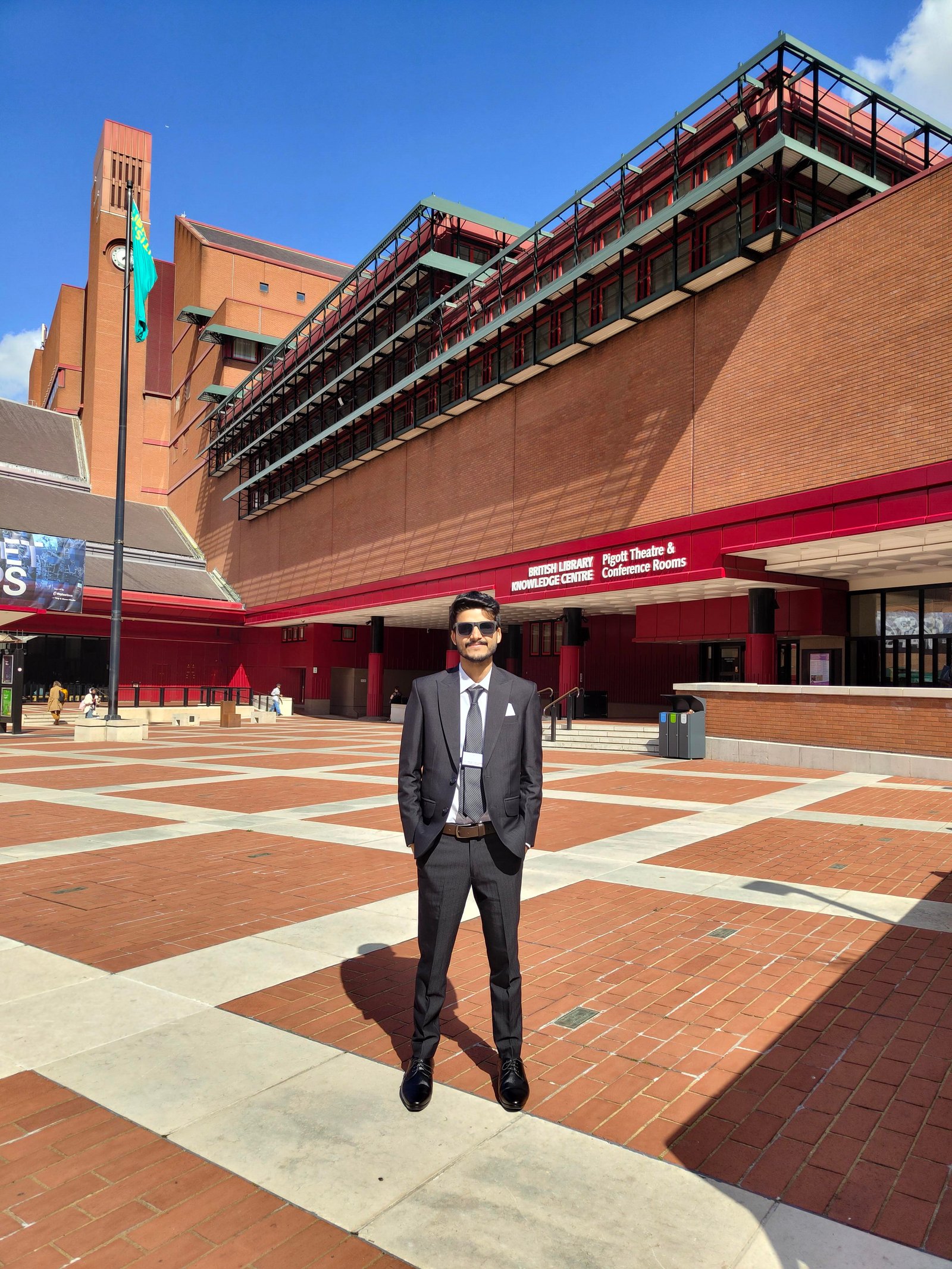
Shahrukh Khan
Doctoral scholar at the English and Foreign Languages University, Hyderabad, India.
(Published in New research in English studies | Cambridge Scholars Publishing)
Introduction
The sea as a literary setting facilitated the formation of the literary imagination in the nineteenth century that ties it to the evolving genre of the novel itself. The advancements in marine technology that supported economic viability and savagery of European imperialism are connected to the development of oceanic literature. This has also led to the rise of nautical and sea fictions. As a location of adventure, economic growth, depredation and slavery during the colonial period, the sea has been demonstrated to be an essential figure and setting for the formation of the literary imagination. The history of oceanic literature goes back to Homer’s Iliad[1] and Odyssey[2] with sea playing an important role throughout the epics. As a setting, the sea has been depicted as a supernatural as well as adventurous space which has shaped the plot of the epics. Oceanic literature, a genre that evolve in late twentieth century, comprises of literary works which are set in or around water bodies that showcases water in various forms and figurations. The literal as well as metaphorical meaning that it carries makes the genre more fascinating. Such works depict water as a source of spiritual rejuvenation, purification, destruction, imagination, and abundance yet scarcity. The growth and expansion of oceanic literature paved the way for blue humanity(ies) which is a tardy acknowledgment of the affinity between contemporary culture and the water. Blue humanities suggests that for millennia, our world has prospered because of the blessings of lakes, rivers, seas, and oceans that has shaped the thought process of humanity. Water has been the lifeblood flowing through the aqueous human civilization. As an umbrella term, it includes both local and international water bodies which has a major role to play in aquaculture, geopolitics, maritime culture, water crisis, submergence of land, and primordial human-water connection. It provides a theoretical framework to the already existing oceanic literature. The sinking archipelagos in different continents, a bhisti[3] (water carrier) in India, a heap of garbage in Pacific—each is inextricably connected with water but in different way.
In the Greco-Roman period, the fear of untraversed waters was transferred to the portrayal of the sea as unfit, unsafe, and vile. Margaret Cohen refers to this fear of water as hydrophasia[4] which “naturally kept the Greeks from becoming very reckless sailors”[5]. From Greco-Roman times until the nineteenth century, oceans were explored primarily as a route to far-off regions with the emphasis on arrivals and departures and not on the experience aboard the ships. While Homer’s Odysseus tries to reach back Ithaca by traversing sea, Tennyson’s Ulysses is ready to plunge into water once more for one last voyage. This shift in attitude of looking at sea not as a hostile space but as a place of dwelling and opportunity has a close connection with colonialism and Victorian spirit “to strive, to seek, to find, and not to yield”[6]. Contemporary authors and critics turned their focus to the water bodies, when nations partly stopped using it as a dwelling place to live and work. They transformed it into a location for spiritual and physical rejuvenation. In what Margaret Cohen refers to as the “sublimation of the sea,”[7] they elevated it to a greater cultural stature and aesthetic power. Throughout the last quarter of the twentieth century and early twenty first century, the sea served as a more intimate metaphor for life. The ocean and sea depicted in literary works are not merely archives but a historical site that is open for creative reinterpretation. Rivers and Seas have inspired myths, folktales, epics, paintings, and operas. The sea is often referred to as cradle of civilisation and we find our kinship with the primordial soup; rivers, seas, and oceans. Men eventually returned to the primordial soup through the use of advanced technologies, but this time they were unable to physically enter like whales and seals. Instead, they have to pretend to be explorers who are trying to reach the remote part in order to re-enter it imaginatively. Think, for instance, how on the driest days our bodies remain full of water and so does our planet even though both droughts and floods disrupt human communities?
Thinking Beyond Odysseus and Ahab
Consider the classic twentieth-century interpretations of canonical texts that explore themes related to the ocean. Odysseus in Homer’s Odyssey is seen as an adventurer who uses all his technical skills to reach back Ithaca, the crew of the ship in Herman Melville’s Moby-Dickprovides an image of factory labour, and Daniel Defoe’s The Life and Strange, Surprising Adventures of Robinson Crusoe of York, Mariner was read as the accounts of a racist coloniser settling new territory[8]. The classic literary works that have a long dureéengagement with the ocean but are rarely understood from an oceanic perspective, confine such reading to the politics of land. Such discontentment for planetary ocean, is the evidence of land locked reading of a literary work since it places water bodies to the fringe. This hierarchy and binary opposition of land or water rather than land and water puts land always at the centre of human imagination.
The twenty-first century saw the emergence of oceanic literature as a distinct genre, rather than being overshadowed by writings on migration, travel, colonialism, postcolonial, adventure, etc. It has been further divided into hydro fiction, sea fiction, and river fiction. Eventually, all of these discussions and literary works set in or around water bodies have been grouped under a single discipline of study known as the “blue humanities,”[9] a term coined by Steve Mentz. This creative reinterpretation has been a key source of inspiration for critical research on the literature and history of the oceans. Steve Mentz with an attention on ecological questions[10] has carried his work outside the politics of land to embrace oceanic environmental philosophy, culture, and artistic performances. The Novel and the Sea (2010)by Margaret Cohen traces the history of sea literature as well as challenges the land-locked assumptions of readers about the novels by highlighting the vital role of the sea in the unification of various lands. But then, her interpretation, like other western scholars in blue humanities, is more Eurocentric. Thus, she mentions only European explorers such as Vasco da Gama and Columbus making them the “historical seamen of Western modernity”[11] even though we have ample reference that Eastern literature is equally well equipped with stories and memoirs of navigation and journeys.
Oceanic literature is concerned with creating an authentic representation of littoral identity. In case of the literature of South Asian countries, especially India where one finds the sea on the south and rivers in the north, the blue humanities might fail to address all the issues. And that is where lies its limitation. Any step of blindly following blue humanities in non-European context will be another act of “epistemic violence”. Blue humanities, as a disciple, should counter a westernised colonial depiction of map in which land always precedes water. “Paracolonialism”[12], a term used by Dilip Menon, allow us to move out of the tragic triad of precolonialism, colonialism, and postcolonialism. It also allows us to think the plurality of times, instead of interpreting everything in a certain bounded geographical location and time frame. Thus, the hierarchy of land has been subverted by thinking of ocean, sea, river, and waterways—space of former colonies beyond terrestrial boundaries—that has contributed in production of a civilisation even before the arrival of colonisers. According to Mahmuod Koria, a historian of the Indian Ocean, critical scholarly works on ocean places oceanic literature at the centre rather than the periphery as it was in the past[13]. With the coming of artificial technology, we no longer perceive the water as an uncharted area where imagination ends.
The contemporary sea fictions include themes of home, space, culture, religion, environment, psychology, men’s battle with nature and nature’s retaliation. The novels of Amitav Ghosh have successfully merged myths, history, and environmental concerns in the novel The Hungry Tide (2004). It set in the Sundarbans, a secluded region of West Bengal which acts as home to a group of small islands connected by rivers. The story is told from the perspectives of two characters yet the chief concern lies not in the characters but the setting. The delta of Sundarbans is constantly under the threat of floods and submergence both in India and Bangladesh. Piyali Roy, an American river dolphin researcher visits Sundarbans to know more about the river dolphins. Ghosh describes the difficulty that climate change poses to realist fiction, similar to one that he has depicted in The Hungry Tide and Gun Island. The sequel to The Hungry Tide is Gun Island (2019) depicts the lives of Dolphins who used to roam freely in the water bodies but because of human intervention they are now restricted to porous boundary of land leading to attenuation of waterscape. In this novel, Ghosh picks up the storyline from The Hungry Tide, with Piyali being summoned back to her research site in the Sundarbans in time to see a huge beaching of dolphins whose underwater life have been poisoned by a factory upriver[14]. Rising sea levels brought on by climate change and a decline in freshwater availability are further problems for the Sundarbans Forest. Moreover, the alpha-omega relationship of human-animal shows how Anthropocene activities has pushed the non-human to fringe of the society. Through this, Ghosh highlights grave consequences of chemical waste thrown into rivers from factories by pointing out environmental concerns.
Planetary Ocean and Blue Ecocriticism
A current under sea
Picked his bones in whispers. As he rose and fell
He passed the stages of his age and youth
Entering the whirlpool.
Gentile or Jew
O you who turn the wheel and look to windward,
Consider Phlebas, who was once handsome and tall as you.[15]
“Death by Water” is one of the shortest sections in T.S. Eliot’s The Waste Land (1922). In this section, the deceased sailor Phlebas is mentioned by the speaker. Phlebas’s bones are picked by the waves, which naturally decays. The speaker goes on to say that the man who was “handsome and tall as you” has passed away. This is the predicament of the Anthropocene, where human apathy toward water bodies has caused the ocean to prepare to swallow the land. Once virile and beautiful like the “handsome and tall” sailor, the rivers, seas, and oceans are dying slowly. As a result, the world is creeping toward reverse Darwinism. This “death by water” will act as double-edged sword where on the one hand, the land will succumb to water and, on the other, the lack of water—the droughts and water crisis—will led to the extinction of living beings. This is the waste land of the modern era manufactured by ongoing Anthropocene activities without consideration for the sustainable management of resources for the future. Thinking beyond/with ecocriticism is a key to counter this apocalyptic situation.
The term ecocriticism refers to land-locked assumptions. It arose in the context of terrestrial thinking, commonly referred to as a “land ethic,” a philosophy usually associated with Aldo Leopold. The rise of ecocriticism can be traced back to the works of Rachael Carson. Her seminal book The Silent Spring (1962) started the critical conversation around the land and its conservation. However, Rachael Carson by profession was a marine biologist and she wrote on ocean ecology that has been left out from the discourse because of continuous interest in land locked ecology. She is known as the forgotten mother of blue ecocriticism and ocean conservation. Her books on ocean and water bodies are Under Sea Wind: A Naturalist’s Picture of Ocean Life (1941), The Sea Around Us (1951), and The Edge of the Sea (1955)[16]. These writings have served as the foundation for blue ecocriticism. The aquatic bodies are equally poised and exploited, in contrast to Carson’s belief that humans “cannot control or change the ocean as he has subdued and plundered” the land[17]. The land’s life-sustaining forces have now diminished, and it is reduced to being the rim of the sea. For the people who live around the edge of water bodies, the seas and rivers represent opportunity, fuel, food, clothing, shelter, and trade.
Blue ecocriticism counters the land locked ecocriticism in two ways. Firstly, blue ecocriticism makes ecocriticism aware of its own oceanic deficiencies, the significance of those deficiencies for the discipline, and the possibilities for overcoming them. Ocean deficit does not imply that there has been a shortage of texts written about the ocean; the literature of the ocean has been more than prolific across diversities in/of texts and cultures. The deficit speaks only of the ecocritical attention to these texts. Secondly, it attempts to raise worldwide awareness of looming oceanic threats and challenges, especially with scientific revelations that tells us about many disappeared islands. Steve Mentz has put it, “we need a poetic history of the oceans” because contemporary culture has “frayed our connections to the sea”[18]. Thus, we go overseas, over seas.
When it became clear that the ocean ecosystems of the world are under threat from pollution, resource extraction, and catastrophe, whales and dolphins were adopted as symbols for environmentalist appeals, as depicted in Ghosh’s novels[19]. Kimberley Patton’s assumptions of apocalyptic water bodies reflected in her book The Sea Can Wash Away All Evils: Modern Marine Pollution and the Ancient Cathartic Ocean in which she states ocean will not be able to wash away our sins as we have already enough filled it with pollution[20]. This prophecy is reflected in the graphic story “Swallow the Moon,” written by Kate Constable and Priya Kuriyan and included in the book Eat the Sky, Swallow the Moon[21]. The story addresses an underwater dystopian city in addition to conventional feminine symbols. It centres on a group of young women who, through their close encounters with the sea and the full moon, are initiated into maturity. In reality, “Swallow the Moon” depicts a post-apocalyptic world that has not advanced. In the story, social regression has been brought by a presumable natural disaster. The girls had to let go of the items, as suggest to them by the elder women, they were holding when they spotted a city that had drowned beneath the surface of the water. This depiction of a submerged city predicts how the submergence of many prominent metropolitan city is approaching, as also suggested by the scientists. The girls seem to hold these items in high regard because, as they put it, “It costs so much—in oil, in energy burned, in forests destroyed… These things must have been much loved, and filled with power, to be worth the sacrifice of a whole world”[22]. We are willing to sacrifice the world for the ever-growing Anthropocene activities in and around water. This has led to incessant adverse impact on the oceans and seas, to the extent that we hardly acknowledge the impending catastrophe or rather deliberately turned our eyes from it.
The oceanic narrative tradition suggests where land meets sea, human control ends. This cliche has continued to be crucial and central to oceanic fiction. But the contemporary sea and river fiction and criticism go beyond this fear of water by merging both land and sea through a porous boundary. Steve Mentz’s point that “Shakespeare’s plays write the sea as opaque, inhospitable, and alluring, a dynamic reservoir of estrangement and enchantment”[23]. Such representations have made their way through literary history and into contemporary writing. A few apocalyptic fictions, such as Ruth Ozeki’s Tale for the Time Being (2013) and Lisa See’s Island of Sea Women (2019), can be seen as diverse contributions to the growing field of blue ecocriticism. While Ruth Ozeki’s work deals with the theme of Tsunami and its impact upon the lives of people living in coastal area, Lisa See depicts a matriarchal society led by the female divers of Jeju Island and the history that has moulded their lives. More importantly, the context behind the novel suggests the fading culture of harvest of Jeju Island where the new generation is not ready to continue the tradition handed over to them because of the rise in sea temperature which led to disappearance of conches, seaweeds, and mollusks. Sidney I. Dobrin in his book Blue Ecocriticism and the Oceanic Imperative wrote:
The world’s ocean is complicated with the turmoil of possession. The possessive world’s indicates ocean to be owned by the world; the world understood not to mean a global ecology, but the possession of the human inhabitants of the planet and their political cartographies. The deeply seated cultural understanding of possession and its extension across ocean perplexes our ability to think of ocean in ways other than territorially and reveals our desire to import land-based logic of ownership on the fluid space of ocean.[24]
According to Buell, this change from viewing seas as the world’s enormous, limitless global commons to being concerned about its endangerment, “should be considered in relation to Carolyn Merchant’s depiction in The Death of Nature of how we mourn what we have killed in nature and the idea of “imperialist nostalgia” attributed to Renato Rosaldo, that we mourn what we have helped to destroy”[25]. When Herman Melville compares the whale hunting of his day to the nearly complete eradication of the buffalo on the plains in Moby Dick, it evokes such “imperialist nostalgia”. These could be also taken as a warning that rivers, seas, and oceans will haunt us if growing human intervention is not reined. Human beings have already contaminated the land, they were and are still polluting the sea by dumping the waste. The sheer volume and area of water bodies engulfed all that has been thrown in it but like everything else, water bodies too have limitation. The great garbage over pacific, rising sea temperature, and extinction of sea animals, are all the signs that points out the limitation of water bodies.
To save this world, Lord Vishnu drank the poison “halahala,” produced during the churning of ocean. Comparably, the sewage and industrial trash that has been dumped into water bodies is the modern equivalent of “halahala,” but unfortunately, no Vishnu will save us. Consequently, leading to the fulfilment of prophecy of the submergence of land. Jakarta, the capital of Indonesia, is a well-known example of a city that is sinking very fast. Venice in Italy, Kolkata, Mumbai, and Ahmedabad in India, Istanbul in Turkey, and Chittagong in Bangladesh, are among the major fastest sinking cities across the world.
Conclusion
Although the emergence of blue humanities is relatively new discipline, the history of ocean-human connection goes back to the birth of civilization and the myth of creation. That way, blue humanities has sustained both the mythic as well as scientific version of ocean-human connection. In Alien Ocean: Anthropological Voyages in Microbial Seas, Stefan Helmreich writes, “We witness a resurgence of an apocalyptic notion that the oceans will not wash away our sins but rather drown us in them”[26]. This notion is there in the religious scriptures. The concepts of “pralay,” “sailaab,” and “Noah’s flood” are held by the Hindus, Christians, and Muslims, respectively, allude to the day of judgement or the end of the world with the submergence of land. These mythical prophecies emphasise human land connection by portraying water bodies in negative light. However, blue humanities and blue ecocriticism, by putting water bodies at the centre, draw the attention to the fatal consequences of long dureéAnthropocene activities in or around ocean, sea, and river happened through oil spilling, dumping of waste, overfishing, whaling, exploiting ground water, etc. In order to address the looming challenges posed by oceans, seas, and rivers, it is imperative that the blue humanities, as an academic discipline, develop a new method of blue ecocriticism by thinking beyond land locked ecocriticism. The emphasis on water bodies—seas, rivers, and oceans—does not take anything away from land and its capacity to endure humanity for so long. Yet, the rapid climate change and resulting recurrent natural calamity around coasts and river banks compelled contemporary scholarship to think of water bodies as a space similar to land. By merging green and blue ecocriticism, we can move to a sustainable world with an equal focus on land and water.
References
- [1] Homer, The Iliad of Homer. Trans. Richmond Lattimore (Chicago: University of Chicago Press, 1951).
- [2] Homer, The Odyssey. Trans. Barry B. Powell (Oxford: Oxford University Press, 2014).
- [3] “Memories of the Water Bearer: A Short History of India’s Bhistis.” Sarmaya. Accessed March 25, 2024. https://sarmaya.in/exhibition/short-history-of-indias-bhistis/.
- [4] Cohen, Margaret. 2010. “Literary Studies on the Terraqueous Globe.” PMLA 125, No. 3 (2010): 657–62.
- [5] Greene, William Chase. “The Sea in the Greek Poets.” The North American Review 199, No. 700 (1914): 427–43.
- [6] “Ulysses.” Poetry Foundation, Accessed March 25, 2024. https://www.poetryfoundation.org/poems/45392/ulysses.
- [7] Margaret Cohen, The Novel and the Sea (New Jersey: Princeton University Press, 2010), 11.
- [8] Cohen. “Literary Studies on the Terraqueous Globe,” 657–62.
- [9] Steve Mentz, An Introduction to the Blue Humanities (New York: Routledge, 2024).
- [10] Steve Mentz, Shipwreck Modernity: Ecologies of Globalization, 1550–1719(Minneapolis: University of Minnesota Press, 2015).
- [11] Margaret Cohen, The Novel and the Sea (New Jersey: Princeton University Press, 2010), 03.
- [12] Menon, Dilip Menon et al., Ocean as Method: Thinking with the Maritime (New York: Routledge, 2022), 15.
- [13] Harikrishnan, S., host. “Rethinking ‘Keraleeyatha’: Centring Oceanic Histories.” Spotify(podcast). 2022.
- [14] Amitav Ghosh, Gund Island (Canada: Penguin, 2019), 12, 195.
- [15] T.S. Eliot, The Waste Land and Other Poems (London: Faber and Faber, 1999), 315-321.
- [16] Rachel Carson, Rachel Carson: The Sea Trilogy, ed. Sandra Steingraber. (New York: The Library of America, 2021).
- [17] Rachel Carson, Sea Around Us (London: London Collins, 1950), 19.
- [18] Steve Mentz, At the Bottom of Shakespeare’s Ocean, (UK: Bloomsbury Academic, 2021), IX.
- [19] Steinwand, Jonathan. “What the Whales Would Tell Us Cetacean Communication in Novels by Witi Ihimaera, Linda Hogan, Zakes Mda, and Amitav Ghosh.” In Postcolonial Ecologies: Literatures of the Environment, edited by DeLoughrey, Elizabeth, and George B. Handley (Oxford: Oxford University Press, 2011), 182–197.
- [20] Kimberley Patton, The Sea Can Wash Away All Evils: Modern Marine Pollution and the Ancient Cathartic Ocean, (New York: Columbia University Press, 2007), 14.
- [21] Constable, Kate, and Kuriyan, Priya. “Swallow the Moon”. In Eat the Sky, Drink the Ocean, edited by Kirsty Murray, Payal Dhar, and Anita Roy (New Delhi: Zubaan Publishers, 2014), 14.
- [22] Constable and Kuriyan, “Swallow the Moon”, 14.
- [23] (Mentz, At the Bottom of Shakespeare’s Ocean, IX)
- [24] Sidney I. Dobrin, Blue Ecocriticism and the Oceanic Imperative (London: Routledge, 2021) 03.
- [25] Steinwand, “What the Whales Would Tell Us Cetacean Communication in Novels by Witi Ihimaera, Linda Hogan, Zakes Mda, and Amitav Ghosh.”, 183.
- [26] Stefan Helmreich, Alien Ocean: Anthropological Voyages in Microbial Seas (California: University of California Press, 2009), 14.
About Author:
Shahrukh Khan is a doctoral scholar at the English and Foreign Languages University, Hyderabad, India. He has completed his M.Phil. in ’The Metaphor of Home in Sea Fiction: A Critique of Yann Martel’s Life of Pi and Joseph O’Connor’s Star of the Sea’ from Mahatma Gandhi Central University, India. He was awarded the Gold Medal in M.A. English from Aliah University, Kolkata. He has published in Cambridge Scholars Publishing, Taylor and Francis, and Lincom Press. His research interests include Blue Humanities, oceanic studies, and postcolonial gothic sea with a particular focus on South Asian literary and cultural contexts.